

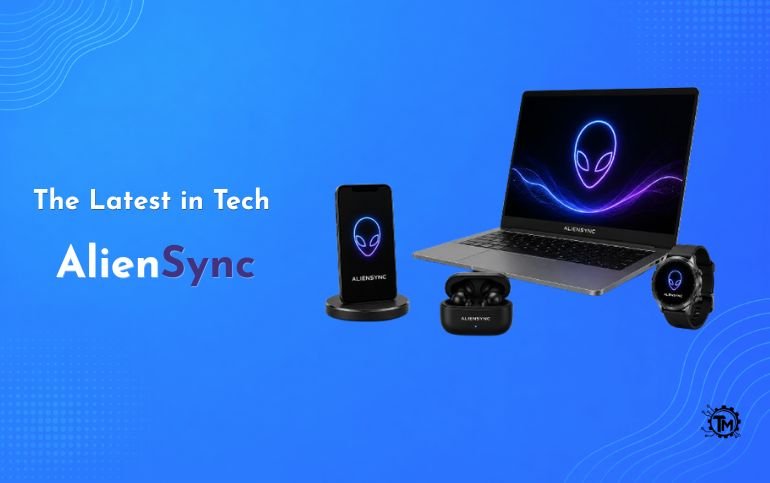
Technology evolves at a rapid pace, making cross-platform synchronicity essential for modern workflows. As highlighted by analyses from Editor Benjamin Tech Guru Keezy.co, the latest in tech AlienSync has emerged as a disruptive force in digital integration, bridging hardware optimization, enterprise software synchronization, and automated connectivity.
While competitors often outline surface-level features, crucial elements like enterprise security architecture, setup procedures, and granular device compatibility matrixes are frequently omitted. This comprehensive overview addresses these missing aspects, presenting a fully optimized analysis of the entire AlienSync platform.
AlienSync Centralized Management Interface. Source: Tech Pixell
What is AlienSync? Understanding the Core Platform Architecture
AlienSync operates as an advanced unified orchestration ecosystem designed to bridge communication gaps between disparate operating systems, IoT frameworks, and enterprise software. Unlike basic cloud syncing utilities that rely on periodic data polling, AlienSync uses real-time, low-latency API integration paired with edge computing models.
Key Technical Pillars:
- Zero-Latency Data Pipeline: Ensures instant state-synchronization across mobile, desktop, and embedded IoT architectures.
- Adaptive Protocol Mapping: Automatically translates payload structures between legacy REST architectures and modern GraphQL or gRPC endpoints.
- AI-Driven Bandwidth Optimization: Dynamically compresses payload sizes based on live network quality, preventing system lag during peak usage. Many system engineers applying practical Beaconsoft Tips for Tech methodologies use these optimization protocols to eliminate bandwidth bottlenecks.
Core Capabilities Missed by Competitors
Many existing reviews overlook the core technical infrastructure that gives AlienSync its competitive edge. Beyond basic UI navigation, the platform relies on advanced backend engineering.
1. Enterprise Security & Encryption Standards
Data security is paramount when synchronizing multi-node networks. Competitor analyses often fail to clarify how data in transit is protected.
End-to-End Encrypted Threat Protection. Source: iftekhar_emon / Getty Images
- AES-256 GCM Encryption: Applied at rest and during transit across all active node connections.
- Zero-Trust Network Access (ZTNA): Every connected client undergo continuous, dynamic re-authentication using cryptographic handshakes.
- Localized Key Management: Users retain exclusive access to decryption keys, preventing unauthorized cloud-level decryption.
2. Deep Hardware & OS Compatibility Matrix
Understanding platform limits prevents implementation bottlenecks. AlienSync supports an extensive range of native and virtualized systems:
| Platform Category | Supported Operating Systems / Protocols | Min System Requirements |
|---|---|---|
| Desktop Workstations | Windows 11/10 (64-bit), macOS Sonoma+, Ubuntu 22.04 LTS | 4 GB RAM, Dual-Core 2.0 GHz |
| Mobile & Wearables | iOS 16+, Android 13+, WatchOS, WearOS | 2 GB Available Storage |
| Smart Home / IoT | Matter Protocol, Zigbee 3.0, Z-Wave, MQTT | Dedicated Gateway Hub |
| Cloud Enterprise | AWS S3, Microsoft Azure Blob, Google Cloud Storage | Dedicated API Token Access |
Setting Up AlienSync: Step-by-Step Implementation Guide
Configuring AlienSync correctly ensures optimal data throughput and prevents sync collisions. Follow this operational workflow to initialize your environment:
- System Environment Audit: Verify that target endpoints meet the hardware requirements detailed in the compatibility matrix. Ensure local firewalls permit outbound traffic via Port 443 and designated custom UDP tunnels.
- Repository Deployment: Download the official release binaries or pull the Docker container image directly from the secure enterprise distribution repository.
- Cryptographic Identity Pairing: Generate your primary master key pair on your core host device. Scan the generated secure QR token or enter the 32-character authentication string on peripheral node devices.
- Policy & Rule Configuration: Set up directional sync rules (One-Way Mirror, Two-Way Real-time, or Event-Triggered Backup) within the central admin console.
- Node Discovery & Validation: Run an automated discovery ping to confirm that all client nodes show active status with latencies under 15ms.
Smart Home & IoT Automation Infrastructure
The integration of smart home ecosystems represents a significant advancement within the latest in tech AlienSync. While traditional platforms restrict users to specific brand hubs, AlienSync serves as a universal translator across heterogeneous device networks.
AlienSync Universal Smart Home Topology. Source: Jakub Zerdzicki / Getty Images
Advanced Automation Capabilities
- Cross-Protocol Triggers: Trigger Matter-compliant lighting systems based on telemetry data received from legacy MQTT industrial sensors.
- Predictive Ambient Control: Uses localized machine learning algorithms to learn user routine patterns, automatically adjusting climate control and power consumption without sending raw data to external servers.
- Automated Failover Routing: If a primary Wi-Fi network drops, AlienSync automatically routes critical security alerts over mesh Bluetooth or secondary cellular backups.
Software Socials: Ecosystem & Community Integrations
Beyond hardware, AlienSync features custom “Software Socials”—modular extensions that bridge project management tools, developer IDEs, and social collaboration suites into a single live stream. Tech researchers at Wavetechglobal.com Latest Tech Gurus frequently emphasize how such unified ecosystems are redefining remote engineering workflows.
- Unified Developer Environments: Real-time synchronization of environment configurations across developer teams running disparate operating systems.
- Contextual Workflow Sharing: Share active workspaces, browser instances, and debugging logs instantly during team review sessions.
- Granular Permission Scopes: Control read, write, and execute permissions per node, ensuring remote contractors access only relevant project sub-directories.
Strategic Advantages Over Market Alternatives
Evaluating AlienSync against general-purpose synchronization software reveals notable performance differences across key benchmarks:
- Resource Overhead: Operates with a minimal memory footprint (under 120MB idling), compared to 500MB+ for traditional electron-based applications.
- Offline-First Architecture: Keeps local changes cached in an encrypted SQLite database and automatically resolves multi-device file conflicts upon reconnection.
- Cost Efficiency: Eliminates the need for third-party middleware tools, consolidating file transfer, IoT management, and workflow automation into a unified platform.
Conclusion
The latest innovations in AlienSync deliver a robust, secure, and highly scalable foundation for cross-platform integration. By bridging the gaps in security, hardware setup, and universal IoT automation left by competing solutions, AlienSync establishes a new benchmark for modern workflow management.
Frequently Asked Questions
Q1: What is the main function of the latest AlienSync tech?
A1: AlienSync provides low-latency, cross-platform data synchronization and orchestration across mobile, desktop, enterprise software, and IoT device networks.
Q2: Is AlienSync secure for enterprise data transfer?
A2: Yes, it utilizes end-to-end AES-256 GCM encryption alongside Zero-Trust Network Access protocols to protect all data in transit and at rest.
Q3: Does AlienSync require a continuous internet connection to work?
A3: No, AlienSync features an offline-first architecture that caches data locally and seamlessly synchronizes changes once connectivity is restored.
Q4: Which protocols are supported for smart home integration?
A4: It natively supports Matter, Zigbee 3.0, Z-Wave, MQTT, and standard REST/GraphQL API connections.
Q5: How does AlienSync prevent file conflict during multi-device syncing?
A5: It uses deterministic CRDTs (Conflict-free Replicated Data Types) paired with timestamp validation to resolve simultaneous file edits accurately.
Source: Tricks Mode
