

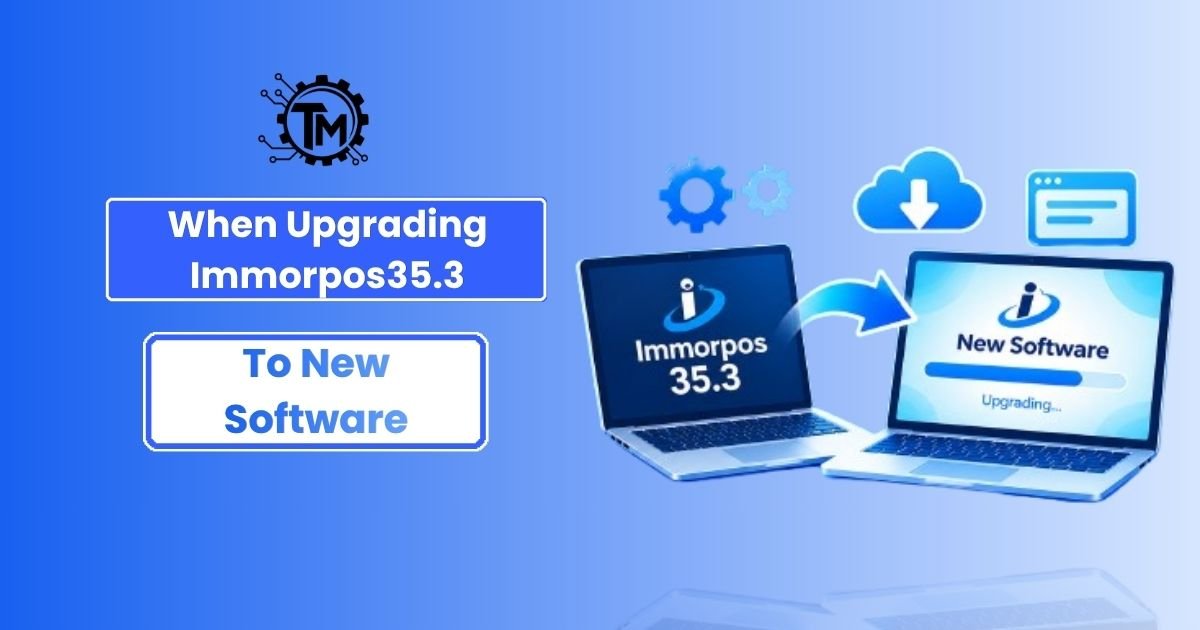
When upgrading older systems, careful planning can prevent data loss, downtime, and unexpected compatibility issues. If you are researching when upgrading immorpos35.3 to new software, start by understanding your current setup and identifying the tasks that depend on it. Check your data backup, connected services, system requirements, and important workflows before choosing replacement software.
A controlled software migration also gives you time to test data transfers and resolve problems before launch. Since public information about Immorpos35.3 varies across online sources, verifying the software’s version, source, and documentation is especially important. This guide explains the key steps, safety checks, migration risks, and practical considerations for making a smoother transition to a newer software platform.
What Is Immorpos35.3 Software?
Immorpos35.3 software is an unfamiliar software name that appears across several recent technology articles. Those articles associate it with business operations, workflow management, automation, reporting, or data handling. However, publicly available sources do not consistently establish one official purpose or product identity.
The safest approach is to treat Immorpos35.3 software as an unverified software designation until its publisher, version, authentication, and documentation are confirmed. A recent investigation found conflicting descriptions and no clearly established mainstream product identity. This matters before any software installation or data connection.
Why Is Immorpos35.3 Difficult to Verify?
Several websites describe Immorpos35.3 features differently. Some mention business operations while others describe technical development or automation tools. That conflict makes independent verification essential. The exact publisher, installer, version number, and software documentation should match before any feature claim is accepted as reliable.
Reported Benefits and Features of Immorpos35.3 Software
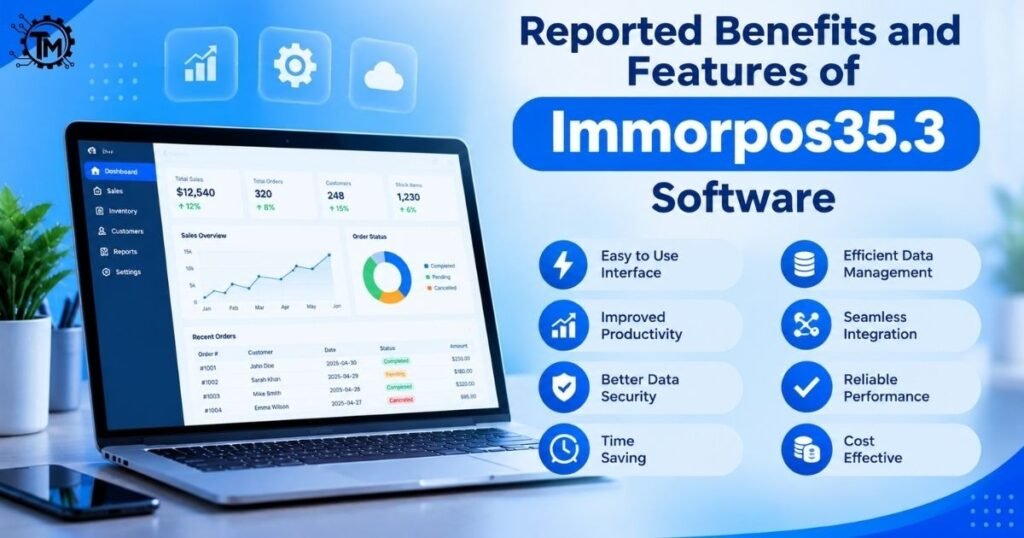
Reported Immorpos35.3 software benefits include centralized information, workflow automation, reporting, and improved operational control. Some pages also associate the name with data processing and business operations. These descriptions can explain what users may be searching for, but they should not be treated as verified specifications without reliable product evidence.
From a business perspective, these capabilities could support data management and operational efficiency when implemented correctly. Automation can reduce repetitive work, while centralized records can reduce scattered information. However, actual value depends on the software’s real functions, configuration, integrations, and the quality of the underlying business data.
| Reported capability | Potential purpose | What to verify |
| Workflow automation | Reduce repetitive tasks | Actual automation controls |
| Data management | Organize business records | Storage and export options |
| Reporting | Monitor business activity | Available reports |
| Integration | Connect other systems | Supported APIs |
| Automation | Reduce manual work | Version-specific documentation |
Which Immorpos35.3 Features Should You Verify First?
Before trusting Immorpos35.3 features, verify data handling, security controls, integrations, reporting, user permissions, backups, and vendor support. These areas affect everyday operations directly. A feature list copied across multiple websites does not prove that the feature exists in the particular installation you are using.
How Does Immorpos35.3 Software Work?
The exact architecture of Immorpos35.3 software cannot be established confidently from public information. A business application of this type would normally connect users, records, workflows, and reports. For businesses exploring similar solutions, Why Use Uhoebeans Software in Business? may also depend on how effectively the software connects these functions. The general flow could involve data input, processing, automated actions, and final reporting. Those steps remain conceptual until verified against the actual product.
A real implementation may also involve system integration, databases, APIs, connected devices, or external integrations. That makes system requirements especially important. One recent implementation-focused source recommends documenting dependencies, integrations, hardware, configuration, and version-specific behavior before committing to a system change.
What Should You Check Inside an Existing Installation?
Start by recording the installed version, storage location, databases, connected services, users, and integrations. Check Immorpos35.3 compatibility with the operating environment as well. This creates a practical record of what the system actually does instead of relying on uncertain online descriptions.
Why Updating Immorpos35.3 Software Is Important
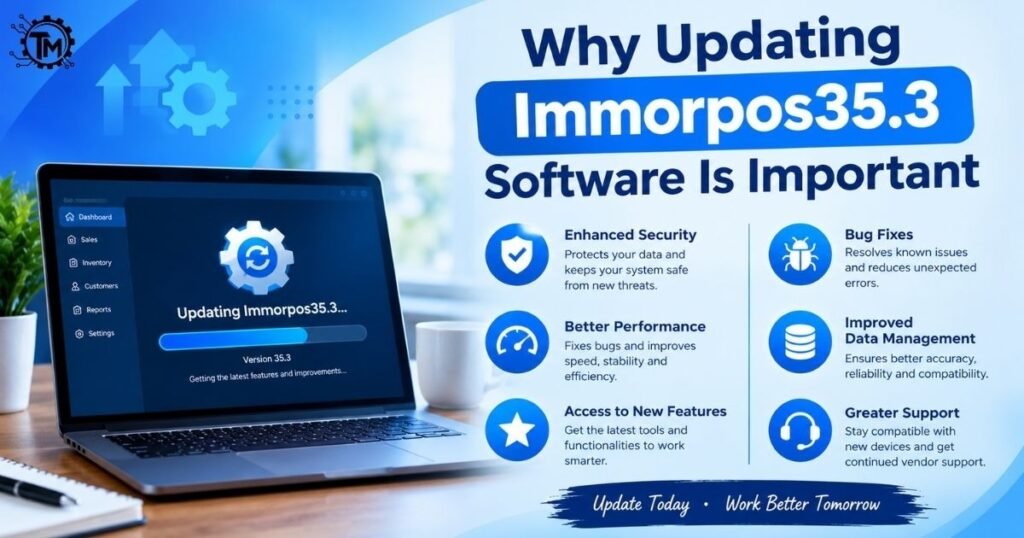
A normal software upgrade can improve security, compatibility, stability, and performance when an authentic update exists. Older applications can struggle after operating-system changes or hardware replacements. However, users should first confirm that an update comes from the genuine publisher and matches their installed version.
A proper system upgrade also needs testing. Review software performance, dependencies, integrations, and recovery options before deployment. If no trustworthy update channel exists, installing a random package could create greater risk. Public sources currently disagree about the identity and maintenance status of Immorpos35.3, which makes verification especially important.
When Should an Immorpos35.3 Update Be Delayed?
Delay an Immorpos35.3 upgrade when backups remain untested, dependencies are unclear, or the update source cannot be verified. The same applies during critical business periods. A controlled software upgrade process should include testing, rollback preparation, and a clear recovery point before production deployment.
How to Use Immorpos35.3 Software Safely
Safety starts with the source. Before Immorpos35.3 installation, identify who supplied the software and where the installer came from. Check the publisher, file signature where available, and security reputation. Never assume that a download simply because it uses the correct product name is authentic.
Good software security also requires limited permissions and reliable backups. Keep sensitive information protected and avoid connecting important accounts until the application has been verified. If an installer cannot be traced to a trustworthy source, testing it inside an isolated environment is safer than placing it directly on a production computer.
Is Immorpos35.3 Safe to Download?
There is not enough reliable public evidence to declare every file labeled Immorpos35.3 software safe. One recent guide recommends verifying the publisher, installation source, installer signature, and security status before running such software. If you’re wondering, “How Much Is My Computer Worth?“ the exact file and system details matter more than its filename.
How to Evaluate the Claimed Benefits of Immorpos35.3
Claims about Immorpos35.3 software benefits should be measured rather than accepted at face value. For example, a claim about faster processing should have a measurable baseline. Compare task times, error rates, manual steps, and reporting accuracy before and after implementation.
The same principle applies to software reliability and automation. Ask for documentation, demonstrations, version details, and reproducible results. If several websites repeat identical claims without linking to independent evidence, repetition should not be confused with verification. This approach helps separate useful information from generic SEO content.
| Claim | Evidence to request | Useful measurement |
| Faster processing | Demonstration or test | Task completion time |
| Better accuracy | Test results | Error rate |
| Automation | Workflow example | Manual steps removed |
| Better reporting | Sample reports | Reporting time |
| Higher reliability | Support records | Downtime and failures |
How Can You Verify an Immorpos35.3 Claim?
Check the publisher’s documentation, version-specific notes, product demonstrations, and actual test results. During software testing, use sample information instead of critical business records. This provides evidence without exposing important operations to an uncertain application.
When Should You Upgrade or Replace Immorpos35.3?
Choosing whether to replace Immorpos35.3 depends on the system’s actual condition. Compatibility failures, missing functions, security uncertainty, poor performance, and weak support can justify investigating software replacement. However, replacement also introduces costs for migration, training, configuration, licensing, and integration work.
An Immorpos35.3 replacement should therefore begin with documented requirements. Compare the current system with the proposed replacement software. Consider total ownership costs rather than the purchase price alone. A cheaper platform may require expensive customization or extensive data conversion before it becomes usable.
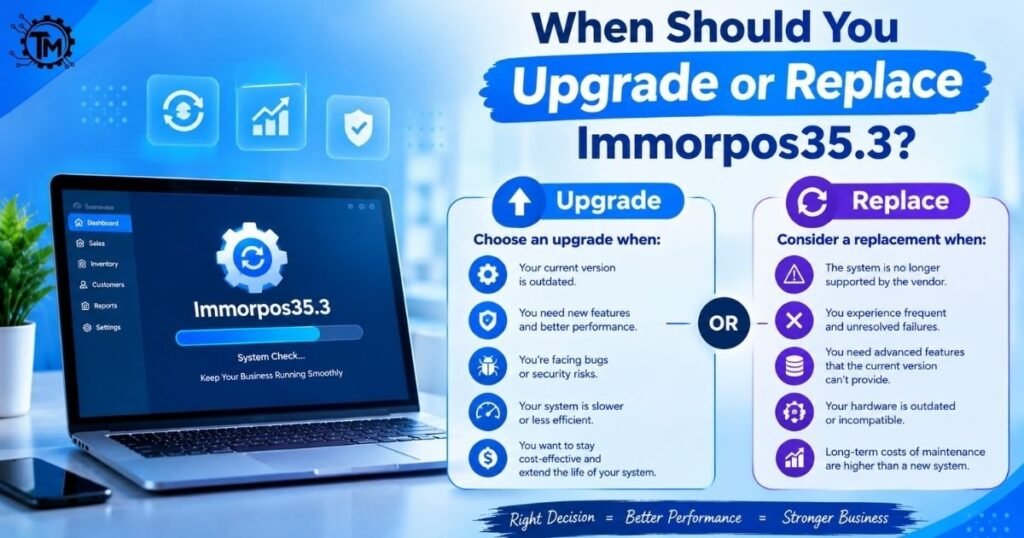
When Does Replacing Immorpos35.3 Make More Sense?
Replacement becomes more practical when the current environment cannot meet essential requirements or cannot be maintained confidently. Before upgrading older software, document dependencies and business workflows. This helps determine whether a targeted upgrade or complete software replacement process offers a more controlled path forward.
How to Migrate From Immorpos35.3 to New Software
A successful Immorpos35.3 migration starts with discovery. Record users, workflows, databases, files, hardware, integrations, and business rules. Then identify what information must move. This creates a foundation for migration planning before any production change begins.
During migrating to new software, perform a verified data backup first. Then use data export and data import methods supported by the replacement platform. Test a small sample before transferring everything. Proper data migration should include mapping, cleaning, conversion, validation, and reconciliation.
| Migration stage | Main purpose |
| Discovery | Understand the existing environment |
| Backup | Protect original information |
| Data mapping | Match old and new fields |
| Test migration | Find conversion problems |
| Pilot migration | Validate real workflows |
| Deployment | Move into production |
| Validation | Confirm accuracy |
| Archive | Preserve historical information |
Immorpos35.3 Migration Checklist
A practical software migration checklist should cover backup, data mapping, testing, user permissions, integrations, reporting, and recovery. During transferring software data, compare record counts and important fields. This catches missing information before the new system becomes the primary business platform.
Common Immorpos35.3 Upgrade and Migration Problems
Software migration problems often begin with poor preparation rather than the migration tool itself. Missing records, duplicate entries, incompatible formats, broken integrations, and incorrect permissions can disrupt operations. Weak data compatibility checks make these issues harder to detect before launch.
Hardware can create another problem. A new platform may have different hardware compatibility or operating-system requirements. Integration changes can also affect printers, scanners, payment systems, databases, or external services. Strong testing reduces these migration risks before users depend on the replacement environment.
How Can You Prevent Migration Failure?
Use a controlled test environment before production deployment. Then establish a staging environment that resembles the live system. A limited pilot migration can reveal problems with data, permissions, workflows, and integrations while the old system remains available.
FAQs
What is the difference between updating and upgrading software?
An update usually adds fixes or security improvements, while an upgrade moves to a newer version with bigger changes.
What is a new software update?
A new software update usually fixes bugs, improves security, and enhances existing features or performance.
What is the purpose of upgrading?
Upgrading provides newer features, better compatibility, improved performance, and potentially stronger long-term support.
Is it upgrade or update?
“Update” usually means improving the current version, while “upgrade” generally means moving to a newer major version.
How do I upgrade my version?
Check the official software source, back up your data, confirm compatibility, and follow the recommended upgrade instructions.
Conclusion
A careful software migration strategy begins with evidence. Before changing systems, verify the current application, protect its information, understand its dependencies, and test the proposed replacement. This approach works whether you are dealing with a small business application or a larger operational platform.
For anyone researching when upgrading Immorpos35.3 to new software, the central lesson is simple: verify first and migrate second. Conflicting public descriptions make that step especially important. With careful legacy system migration, tested backups, user training, staged deployment, and post-launch validation, a software transition becomes far more manageable.
Source: Tricks Mode
